
"Theoretical study of KRAS G12C secondary mutations influencing inhibitor resistance" by Riksa Meidy Karim, Kazutomo Kawaguchi, Hidemi Nagao is published in BPPB as the J-STAGE Advance Publication.
2026 July 09 BPPB
A following article is published as the J-STAGE Advance Publication in "Biophysics and Physicobiology".
Riksa Meidy Karim, Kazutomo Kawaguchi, Hidemi Nagao
"Theoretical study of KRAS G12C secondary mutations influencing inhibitor resistance"
URL:https://doi.org/10.2142/biophysico.bppb-v23.0021
- Abstract
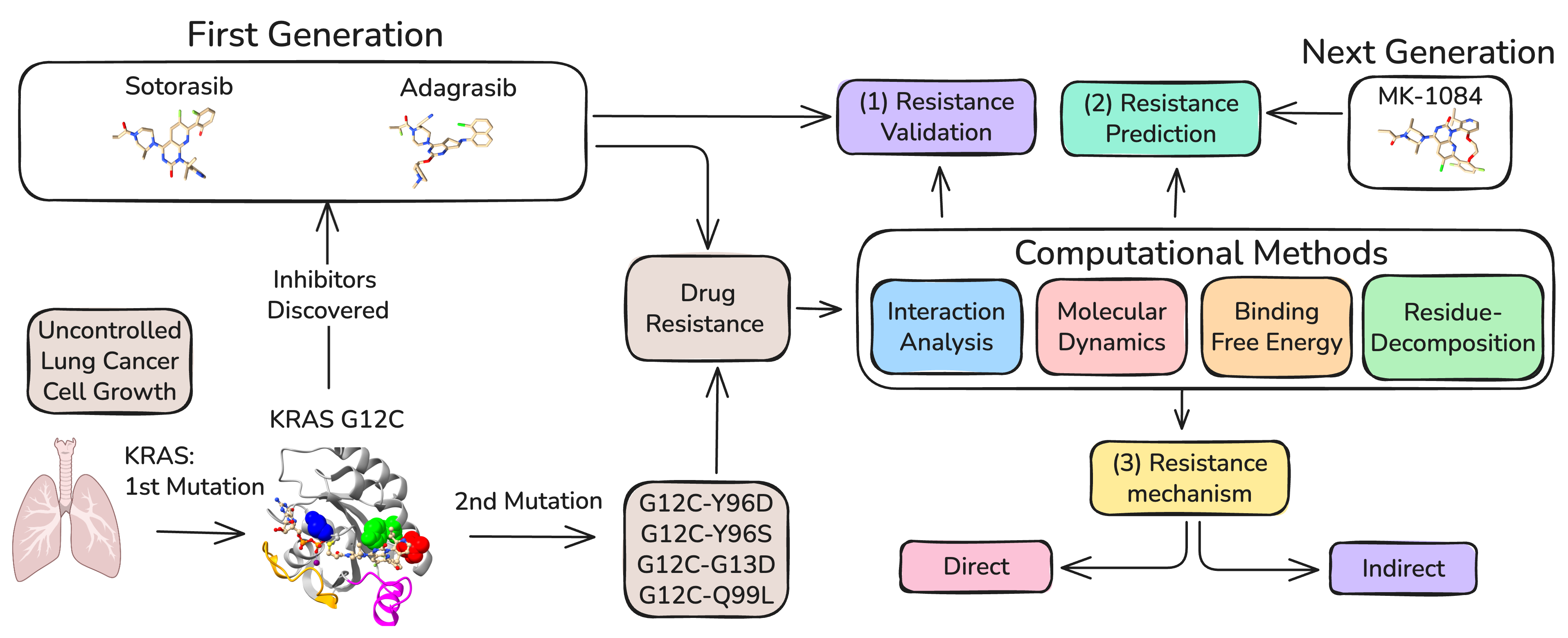
- KRAS is a small GTPase essential for cell signaling, and the G12C mutation acts as a key oncogenic driver in multiple cancers. First-generation KRAS G12C inhibitors, such as sotorasib and adagrasib, have shown clinical efficacy, but are limited by acquired resistance due to secondary mutations. In this study, we investigated the impact of secondary mutations (Y96D, Y96S, G13D, and Q99L) on the binding efficacy of sotorasib, adagrasib, and the next-generation inhibitor (MK-1084) using molecular dynamics simulations, binding free energy calculations, and dynamic protein-ligand interaction analysis. Our study revealed that each secondary mutant variant exhibited variations in the degree of resistance to the inhibitors. Two major resistance patterns were identified: direct and indirect. Our analyses revealed that Y96 mutations directly disrupt inhibitor binding, conferring high resistance to all three inhibitors, whereas G13D and Q99L indirectly alter the binding environment by influencing other residues, resulting in variable resistance profiles. This study provides detailed molecular insights into resistance mechanisms to support the rational design of more robust KRAS G12C-targeted therapies.